|
Kevin and I were grateful to attend the White Buffalo Calf Ceremony and Gathering of Nations on June 26th, as part of the Buffalo Field Campaign's media team. We used footage we captured with BFC's Brand and Social Media Coordinator Chuck Irestone to create the cut above. Speakers included: Lee Juan Tyler (Chairman, Shoshone-Bannock Tribe) Develynn Hall (Miss Shoshone Bannock) Ryman LeBeau (Chairman, Cheyenne River Sioux Tribe) Darnell Sam (Wenatchi Salmon Chief, Colville Confederated Tribes) Michael Bearcomesout (Sacred Hat Keeper, Northern Cheyenne) Vincent White Crane (Sundance Priest, Northern Cheyenne) Walks Out of Water/Devin Oldman (Northern Arapaho) James Holt, Sr. (BFC Executive Director, Nez Perce) Mike Mease (BFC Co-Founder) The ceremony was presided over by Chief Arvol Looking Horse, the 19th generation C'anupa (Sacred Calf Pipe) Keeper of the Cheyenne River Sioux Tribe. Buffalo Field Campaign's press release about the ceremony can be found here. See BuffaloFieldCampaign.org for more information on this organization's 27-year mission to defend the wild buffalo of Yellowstone.
0 Comments
  Is this controller a mash-up of an airplane and a Czech style upright? Looks like it to me... Is this controller a mash-up of an airplane and a Czech style upright? Looks like it to me... Kevin and I were in Portland over the weekend attending a wedding dinner for my Uncle Mark and his wife Lily (and Mazel McTov to them!) which meant I got to visit the Portland Puppet Museum. Even roped my sister Anna in too! We spent almost two hours in the single-room museum in wonderful delight as founder Steve Overton regaled us with stories, building techniques and demonstrations. I never imagined Steve would be on site to show us around and boy are we lucky that he was. The museum is an unimaginable treasure trove, but I think Steve himself is the real gem of the collection. From their joints to their controls, their facial expressions to their elaborate costumes, Steve’s puppets are stunning. And his ability to create so much in such a small space is a miracle. But above all I was struck by his boundless generosity. He was willing to share so much knowledge while also celebrating the prowess of other puppeteers. Steve brought out marionettes by Phillip Huber and Mary Nagler and we all ooh’d an ahh’d, even as his own brilliant creations looked on from their strings. This generosity is a striking phenomenon to me in my (admittedly recent) dive into puppetry. I’m not sure if it’s because there are so few practitioners anymore, but I’ve experienced this communitarian attitude in other instances – like at the Bob Baker, where video recording is encouraged (a boon that allowed me to figure out how to string my puppets to blink on an airplane control), and with Joseph and Wilma Cashore, who graciously entered into a correspondence with me and even gifted me Joseph's DVD. Similarly, Steve was an open, joyous book. He didn’t mind me taking photos or videos, asking weirdo questions or for him to repeat a name or piece of information – he just wanted to talk puppets. To share what he knows and what he’s done. And the stories are delicious. Just ask him how he ended up John Ritter’s body double in Skin Deep.  Double sash cords for knee and ankle joints = food for thought. Double sash cords for knee and ankle joints = food for thought. I could have stayed at least another two hours, but we had that wedding dinner to make. As we were leaving, Steve said “If you watch my Wizard of Oz, be SURE to have something to DRINK!” For Pride month some years ago, he created a stage show to accompany Meco’s half-hour Wizard of Oz sonic disco odyssey. The next morning I tracked it down on his YouTube channel. He was right – a drink or three would have been entirely appropriate, but I’m glad I was sober. He really pulled out all the stops!
Steve: thank you for a fabulous, funny, unforgettable day at the museum. Next time I’m in Portland I know stop #1. On October 27th, 2023 Kevin and I received a call from our friend Jan Michael Looking Wolf. Jan wanted to know if we'd be willing to come to Eugene in November to shoot live footage of his new musical project Native Rose. Kevin and I looked at each other, blinked a few times said "Yes" in unison. Jan had no idea we'd just returned from the Missoula County Courthouse where we had quite literally just gotten married. The offer felt like the Universe's wedding gift to us. Or Jan's. Or both.
We shot with three cameras: two GoPros on tripods and a roaming iPhone. We learned a lot (especially about the importance of correct lighting settings on any camera being used in a dark concert hall and certain pitfalls of "cinematic" mode on iPhone15). Mostly we had an amazing time basking in the music and the excellent energy of everyone in attendance; it was a beautiful night and we were so honored to be a part of it. Editing "We Can Live As One" over the past weeks has been a welcome chance to relive the magic of the concert and the power of One Heart. May the performance bring you the hope and peace it did for us -- and hayu-masi to Jan, RG and the Native Rose Band! 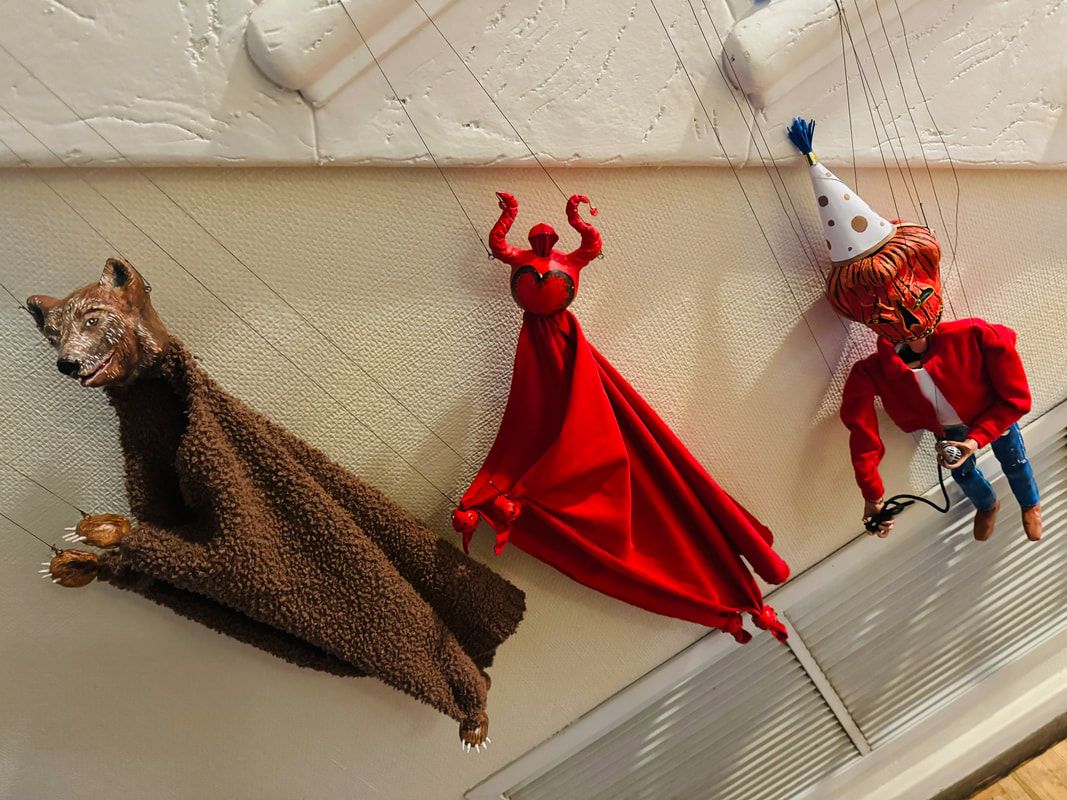 “There’s an article I think you should read,” my husband Kevin offers, somewhat tentatively, over coffee and tea. He knows from experience that my attention span is short -- there’s about a 50% chance I’ll finish (or even open) what he emails for me to read. Not because I don’t want to. I just…get distracted. “What’s it about?” “Neo-romanticism.” I don’t take the bait immediately, and the morning goes on. But the phrase sticks in my head and in the afternoon I circle back: “What about that article made you think I should read it?” “It reminded me of your puppets.” Now he has my attention. The article will almost certainly be read. And by the next day, it is: The zeitgeist is changing. A strange, romantic backlash to the tech era looms. By Ross Barkan For the last two years I have been falling, at an increasingly rapid rate, down a very particular rabbit hole: marionettes. I built my first one in 2022 for a children’s video series, and it was love-at-first-string. Making puppets co-mingles all my passions, allowing me to exercise every single muscle I’ve tried to develop over the last 25 years. From the visual arts of sketching, sculpting and painting, to writing music and dialogue, costume and set construction, problem solving and mechanical engineering (a new discovery for me) and finally performance – in the tiny world of marionettes I can test my mettle as an auteur. I’m not a fan of that word, but the alternative “control-freak” is even less appealing. And I think that in my creative life it’s what I’ve always wanted to be. The world-builder. God. We all seek out agency, control, power in our own ways, don’t we? Many years of enjoying the Bob Baker Marionettes prompted the question “I wonder if I could do that?” I found that I could, and relished pretty much every part of the process. But the delighted look on people’s faces when they see what I’ve built is a major, unexpected perk. Over the last year, in addition to succumbing to the gravity of my puppet-flavored rabbit hole, I’ve come to accept that I’m really a live performer. A 6-month stint at the Utah Shakespeare Festival – my first time in a repertory company since 2014 – reminded me that there is no substitution for the thrilling terror I feel before stepping onto the stage. I’ll always be an actor. I’ll always say yes to a chance to shape characters with my whole being. It’s an exhausting, dangerous and thrilling thing to do – trying to just live in front of a room full of people. But puppetry is acting with a mask (a fact my friend and fellow actor Ramiz Monsef pointed out to me last year). I find this extremely appealing. Masking removes traces of self-consciousness, doubt and ego. It frees your consciousness to flow entirely into the tiny creature dangling from your fingers. You’re here, now. YouTuber Byrne Power has a video on his puppet channel entitled “How to Start a Puppet Theatre or Puppet Troupe – Instructions for a Reality Based Art” in which he asserts that most people in the US have never seen a live marionette show. Enviably, Byrne has spent a lot of time in Europe and other parts of the world where puppetry gets real attention and thrives as an envelope-pushing art form. But in the US broad exposure is limited to the (brilliant) muppets of Jim Henson. The names of marionette artists such as Hobey Ford, Jim Cashore and Phillip Huber are not widely recognized beyond the puppet world. Their live performances are hard to see unless you live or happen to be in the particular part of the country where they’re based (and now Mr. Cashore is retired so I fear I’ve lost my chance entirely). Investigating the record of marionettes in America led me to incredible work by master puppeteers and troupes that I had never heard of – Tony Sarg, Rufus and Margo Rose, the Yale Puppeteers, René Zendejas, just to name a few. In the distant past, puppets had a place on vaudeville stages, and even early film and television -- explaining coffee production, importation and packaging for the American Can Company and hawking washing machines for RCA Whirlpool, for instance. So there is rich history. But I feel the truth of what Byrne said in his video: in the US of the 21st century, marionette performance is a vanishingly rare art form. Kevin and I were married in Missoula, Montana (his home for the last 10+ years) in late October, 2023. He knew I was eager to get my puppets out in the world but had been nervous to do so. It felt like a big step, busking for the first time at the age of 40; somehow all the live theater in formal playhouses before paying audiences just wasn’t the same. In broad daylight, on a street corner, people can wander up and talk to you, touch the wiggly thing on strings, interact, walk away in the middle of it. The rules just aren’t the same. Even from behind the ‘mask’ I wasn’t sure if I’d be able to handle it, and it both excited and terrified me. So Kevin suggested a gentle entrée to the world of street performance: walk with the puppets in the Día de Los Muertos parade on November 2nd. “Great!” I thought. The focus wouldn’t really be on us at all. It would be a chance to offer up what I’d been working on to the community in a spirit of celebration and remembrance. And a way for me to honor the life of Maila Nurmi, creator of Vampira, the inspiration for one of my new marionettes. It was all of those things, but it ended up being more. Kevin rigged a speaker to his chest so our puppets had their own music to dance and lip-synch to. Face after face lit up. Parents led shy children over to us and whispered “See? It’s a marionette!”, and I knew many were hearing the word for the first time. Some kids were weirded out, even frightened at first. But most came around for another peek and lingered. Others were instantly mesmerized. Friends and family have suggested I start an Instagram page or make TikTok videos. I’ve given it thought. “Maybe I could develop enough of a following to monetize!” But my gut consistently offers a hard ‘no’ in response. There is something intrinsic to this that demands the live experience. Like the neo-romantics heralded by Ross Barkan, I am engaging in an act of rebellion. Choosing to live at least this part of my life off-screen. My marionette obsession is an atavistic one. When I pull these strings I’m connecting to artists across space and time. Through their creations, I’ve come to know the minds of people who were gone before I ever arrived. To audiences in the present I’m offering a reality that can only be experienced here and now, where and whenever “here” and “now” are – a black box theater, a streetcorner, a parade. I think there’s something sacred in that. It’s small enough to swing from my fingers, but far larger than the video player in the palm of your hand.
For the last year, my partner Kevin and I have been quietly plugging away on a project completely unlike anything I've ever attempted before -- Earth Music Odyssey. Following the adventures of space alien Jheri and their pet Borborygmus, this short-form children's series explores world music and the diversity of instruments and artists in said (extremely broad) genre. We were lucky to receive sponsorship from the BrittKids Klub, an educational arm of the Britt Music & Arts Festival in Jacksonville, OR. Kay Hilton co-produced the series on that end. Thank you Kay.
I've collaborated with Britt for a long time -- first with The Meriwethers (our Lewis & Clark Band) and then with the video projects Junebug's Forest Friends and Junebug's Curious Year. On all of these previous ventures, by best friend and frequent collaborator Manda Bryn Severin was the main creative engine and liaison with Britt. It was always a delight and privilege to work in service of her vision and I hope for more in that department. But the beginning of 2022 saw me yearning for some kind of new creative endeavor of my own. Manda mentioned that given the history, Britt might be open to hearing a pitch from me -- and Earth Music Odyssey was born. Really, it felt like a bubbling-to-the-surface of something that's been brewing inside of me for years and years. Probably since childhood. I remember watching Punch and Judy shows on a vast lawn in Stanley Park in the late 1980s (my mom often took us with her when she was on a lengthy shoot -- in this case, for Stephen King's IT). I wish I could say these viewings immediately launched a lifelong obsession with puppets, but it I think they just planted the seed. It wasn't until 2014 or 15 that it germinated -- at the original location of the Bob Baker Marionette Theater in downtown LA. Watching the puppets parade on the red carpet, I fell in love instantly. Maybe it was that I'd never seen string puppets up close before. They're delicate, expressive and demure (by which I mean they don't have a hand shoved up their ass). In my mind, they're so wholly different from rod-arm and hand puppets as to be another species. Not that I don't love the Kermits and Lambchops of the world, it's just...marionettes grabbed me in a special way. Pause for a plug: The Bob Baker Marionette Theater has since moved to a new location on York Boulevard in Highland Park, an old vaudeville house that the company has polished into a jewel. From the murals on the walls to the little window vignettes (perhaps a nod to Bob's Disneyland window displays?) to the ornate pipe organ stage right, BBMT's new home is more than equal to its previous one. And its players are as charming as ever: tiny drums beat themselves, particolored flowers waltz on delicate feet, black cats shimmy, skeletons ride motorcycles and gangly hens lay tiny eggs that (spoiler alert) hatch and make their own exit. Every time, I gasp with delight and giggle with glee. It's actually kind of embarrassing, but fuck it. I watched a two-year-old on her first day at the Bob Baker Theater last year, eyes stretched in silent wonder, arms reaching out toward the unbelievable spectacle. An instant fan. She left chattering with excitement, her young mother and grandmother barely able to pry her from her seat. I could relate. Puppets aside for a moment, I began gestating another obsession circa 2015. There's no easy or polite way to say it, so here it is: Huell Howser. He drives me NUTS. He asks insensitive questions, pushes people in and out of shots, barks at his cameramen (bless you Luis and Cameron), puts his hand on the small of ladies' backs in tight hallways -- all the old-guard, quotidian offenses. He's so ridiculously tone deaf, it's surely a bit. Except it's not. (The one possible exception I've come across is an episode where he weeps with hushed reverence in the presence of premature babies and their nurses.) And yet...he's inquisitive. He's fearless. He made something out of nothing again and again. He delights in weird shit and lifts it up for people to see. And at least he exposes everyone equally to his boorishness; in every episode I've seen -- and I've seen a lot -- he appears to be color unconscious (for better or worse) and to sincerely love learning about new cultures, arts and practices, even if he asks the most obnoxious questions you'd never think of. I love him, the way I love my late southern grandpa West. So Jheri, the E.T. at the center of Earth Music Odyssey, is the non-binary bastard love child of -- you guessed it -- the Bob Baker Marionette Theater and Huell Howser. A uniquely California creation and one straight from the heart. There are a lot of people who helped out that I'd like to thank and hopefully they know who they are -- but I'll urge you, reader, to peep the episode if you want their names. (Okay, I'm also just proud of our end credit sequence.) Britt plans to release an episode per month through June, so subscribe to their Youtube channel or sign up for the BrittKids Klub e-newsletter here if you want updates. Life is so short. I'm learning to follow my heart even if it takes me in a direction that's strange and intimidating. Wish me courage in that department and I'll wish the same for you. Nell 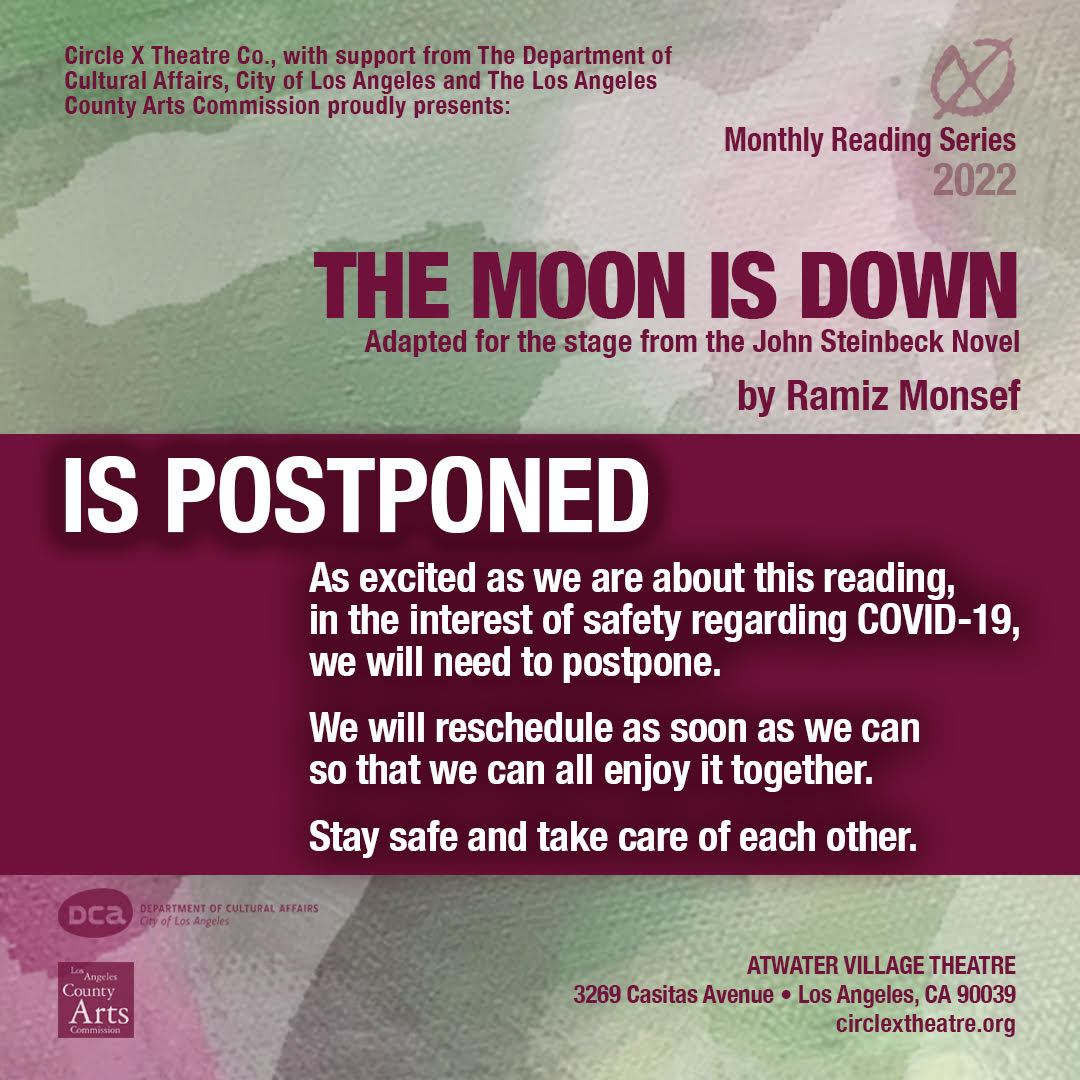 Unfortunately we've had to postpone this reading for COVID safety reasons. The producers at Circle X and the rest of the creative team are eager to get it back on the books though -- and props to all of them for putting safety first! America needs this play just now, so stay healthy and check back for an update soon.
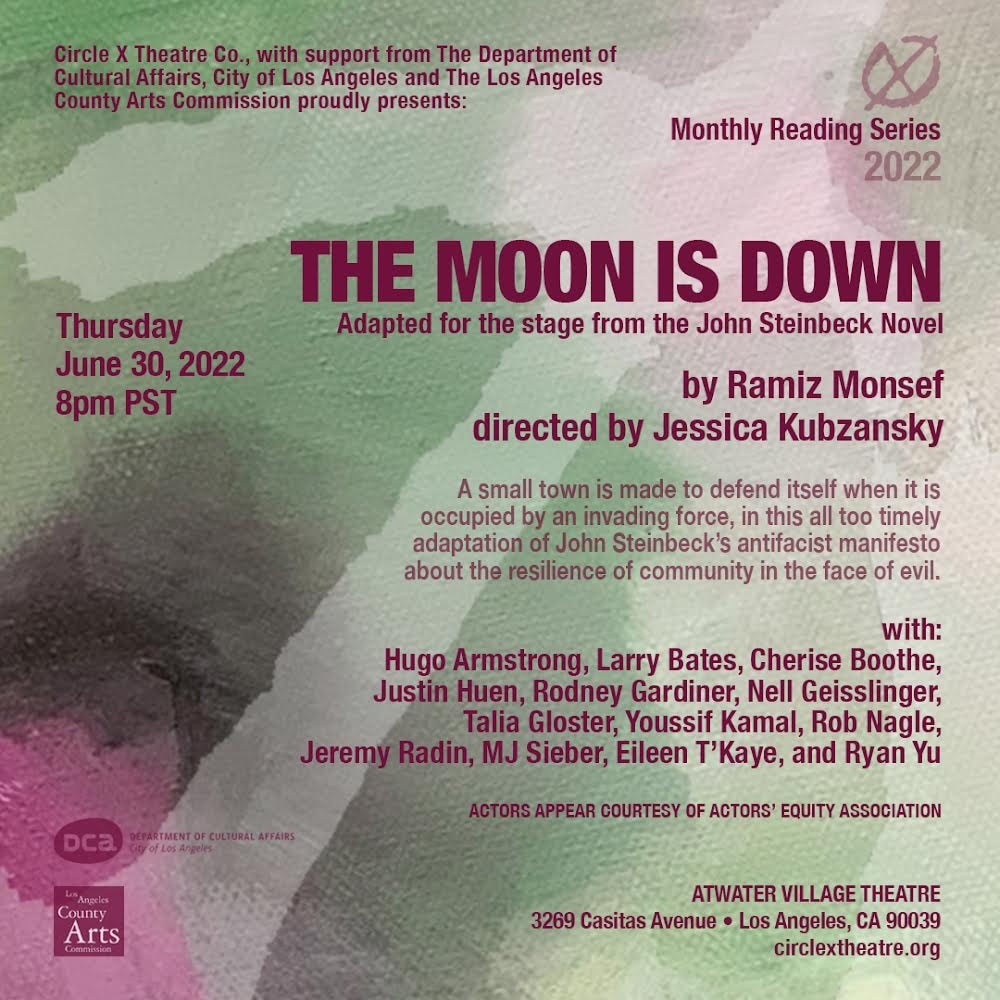 Delighted to be participating in a reading of THE MOON IS DOWN this Thursday, June 30th, at the Atwater Village Theatre. My longtime theater pal Ramiz Monsef has penned this adaptation of the John Steinbeck novel, and the inimitable Jessica Kubzansky of Boston Court Pasadena directs. We're produced as part of Circle X's Monthly Reading Series (pleasure to be working with them for the first time). It's FREE and OPEN TO THE PUBLIC, and has the timeless appeal of OUR TOWN and TO KILL A MOCKINGBIRD plus the teeth of THE CRUCIBLE. Come on down and get your guts wrenched -- and your heart uplifted -- in this dark week.
The Fairy Boobmother is back -- with a whole new look!
I was delighted to be asked by Nuudii Bra creator Annette Azan to reprise my role as the magical, body positive doyenne of bazongas. Lotsa fun working with directors Angelica Migliazza and Pseudo Lunsford and the producers at Mutesix (my second time in the saddle with this talented production team). Hey, if I can perform in a bra and fairy wings with a camera 5 inches away, I can do anything baby! From March 20th - April 10th, 2022 I'm appearing in the American premiere of Clean/Espejos, a new, fully-bilingual (English/Spanish) play by Christine Quintana, directed by Lisa Portes. The formidable, funny, fabulously talented Lorena Martinez plays Adriana; I am Sarah.
This is the most challenging and fulfilling work I have ever done, and I am so grateful to South Coast Repertory for the opportunity. It's unlike any other play I've encountered. During rehearsals, we started comparing it favorably to a two-person female Hamlet. The text is that rigorous, multi-layered, complex -- and I've been lucky to mine it since its first reading at the Pacific Playwrights Festival (PPF) almost exactly a year ago. Approaching it this time, I was once again humbled to be in a room with so many brilliant, hard-working women. Yes, an ALL-FEMALE rehearsal room! My first in 20 years on the boards, and a new bar has been set. If you're going to be in Southern California late March-early April, come on down to Costa Mesa and catch us while we're at it. The last few days of our run coincide with PPF 2022, so there's lots to see and do if you make out in then. I promise this one will challenge and surprise you. Don't miss it. Great experience hosting this commercial for Sinch and ThinkMojo, directed by Ron Small and produced by Ashley Moore of Sway Productions!
|
Archives
July 2024
CategoriesFind me on YouTube! |

 RSS Feed